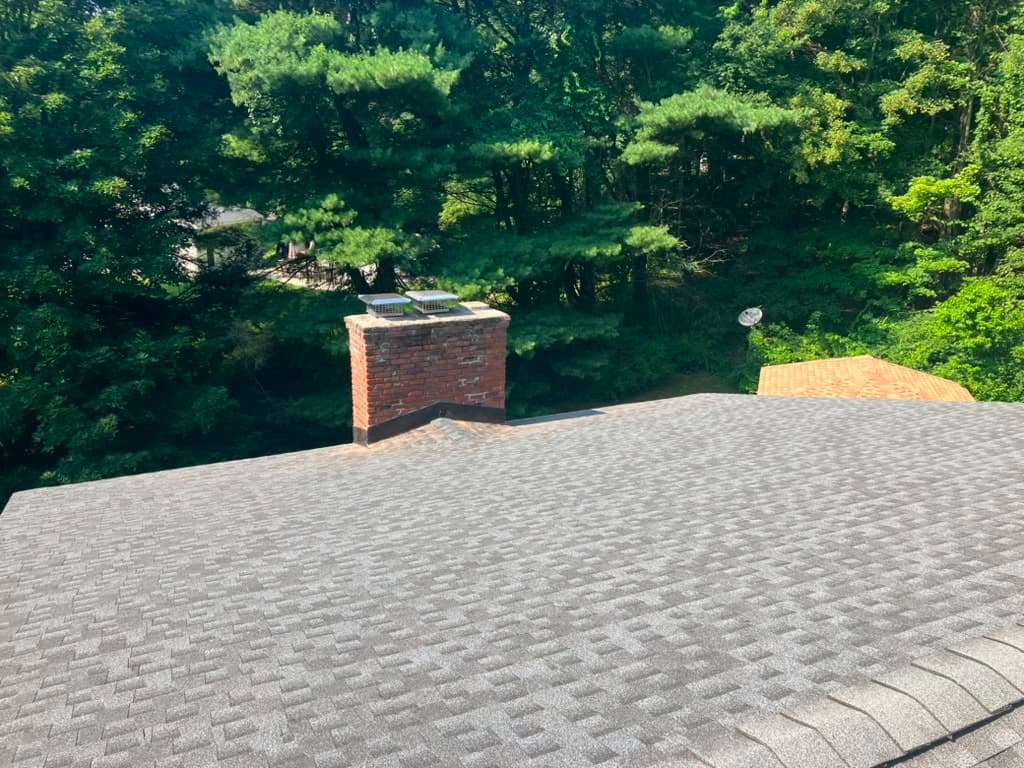
We work on both sides of the Putnam-Fairfield line regularly, and one thing that surprises homeowners who move between the two areas is how different the older chimney construction actually is, just a short drive apart. It’s not a stylistic difference. It comes down to what was locally available and what got built with it, and it has real consequences for how a chimney should be repaired today.
Why fieldstone shows up so much in Putnam and Dutchess
A lot of the older homes in the Hudson Highlands and the river towns, Cold Spring, Garrison, and plenty of farmhouses further up into Dutchess, were built using fieldstone for at least the base and often the full height of the chimney. This wasn’t an aesthetic choice so much as a practical one. The region is full of exactly the kind of stone that gets pulled out of the ground when you clear land for a foundation or a field, and builders used what was already sitting on the property rather than importing brick from somewhere else.
The result is a chimney built from irregular, unevenly shaped stones set in wide, uneven mortar joints, since fieldstone doesn’t stack with the tight, uniform coursing you get from a manufactured brick.
Why brick is more common closer to the Connecticut coast
Fairfield County’s older housing stock, particularly in and around towns with earlier industrial and mill history, leans more heavily on clay brick, even in homes from a similar era to the fieldstone chimneys further north. Connecticut had earlier and more established brick manufacturing than a lot of the more rural parts of the Hudson Valley, which meant brick was a practical, locally available material there in a way it wasn’t yet further north and west.
The result is chimneys with tighter, more regular coursing and narrower mortar joints, built from brick that was often lower-fired and softer than what’s manufactured today.
Why this actually matters when it’s time to repoint
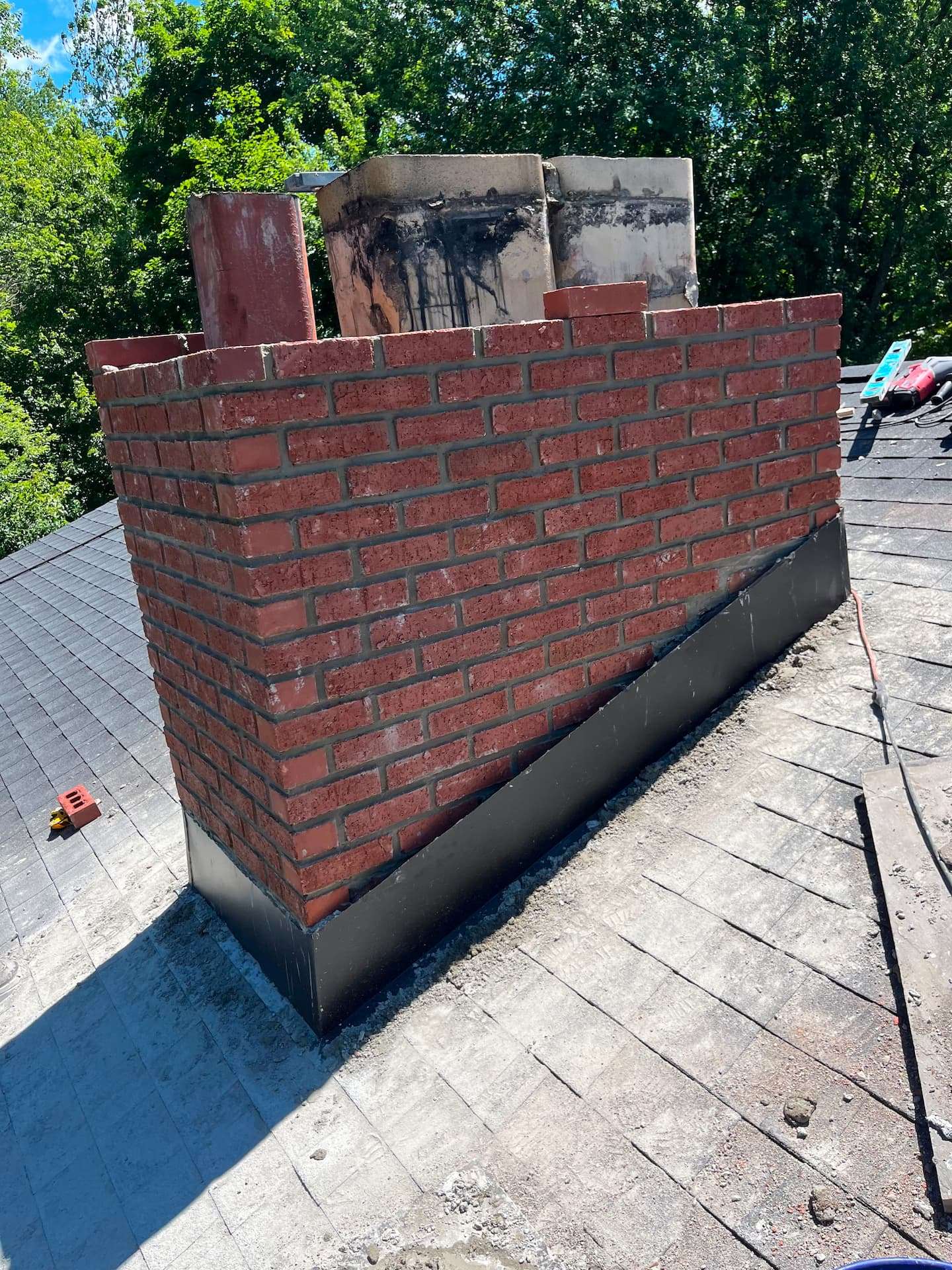
This is where the difference stops being a historical curiosity and starts being a real repair consideration. Fieldstone and older soft brick both need a mortar mix that’s softer than what most crews reach for by default.
Modern mortar mixes lean heavily on portland cement because it’s strong, cures fast, and is what most masonry supply houses stock as their standard blend. That strength is exactly the problem on older masonry. A hard portland-heavy mortar is less permeable than the stone or soft brick around it, which means moisture that gets into the wall can’t migrate back out through the mortar joint the way it’s supposed to. Instead it gets trapped against the stone or brick face, and over repeated freeze-thaw cycles, that trapped moisture is what causes spalling, the stone or brick surface cracking and flaking away.
A traditional lime-based mortar is softer and more permeable, closer in hardness to the fieldstone or soft brick it’s holding together. It lets moisture move through the joint instead of the masonry unit, which is exactly the behavior an old chimney needs to actually last. This matters on both sides of the state line, but the stakes are a little different: a fieldstone chimney repointed with the wrong mortar tends to crack at the joints, while a soft brick chimney repointed the same way is more likely to lose material off the face of the brick itself.
Questions worth asking before you hire someone
Because the two areas we serve have such different older construction, one of the most common repeat-failure situations we see is a chimney that was repointed correctly for one material and incorrectly for the other, usually by a crew that does mostly one type of work and applied the same approach everywhere.
Settling adds another layer to this. Many of these same fieldstone chimneys are also dealing with decades of foundation movement, which we cover in more detail in our guide to pre-1940s chimney settling in Putnam and Dutchess County. A chimney that needs both repointing and a look at its liner is common on homes this old.
A few things worth asking a contractor before they start:
- Have they repointed fieldstone specifically, not just brick, if that’s what your chimney is
- What mortar mix they’re planning to use, and whether they can explain why it’s appropriate for your specific masonry
- Whether they’ve worked on homes of a similar age and construction in your specific town, since a contractor used to newer brick chimneys can genuinely misjudge an older, softer one
- Whether the quote distinguishes between repointing (repairing existing mortar joints) and a partial or full rebuild, since fieldstone in particular sometimes needs individual stones reset rather than just new mortar
What we do differently depending on which side of the line we’re on
When we quote a chimney in Cold Spring or up toward Dutchess, we’re planning for fieldstone or soft early brick and a lime-based mortar mix from the start. When we’re working in Fairfield County on an older brick chimney, we’re assessing the brick’s actual hardness and firing quality before deciding on mortar mix, since not every older brick chimney needs the softest possible mortar, but a meaningful number of them do.
The chimney doesn’t care which state it’s in. It cares what it’s built from, and matching the repair to the actual material is what determines whether the work lasts another eighty years or needs to be redone in five.