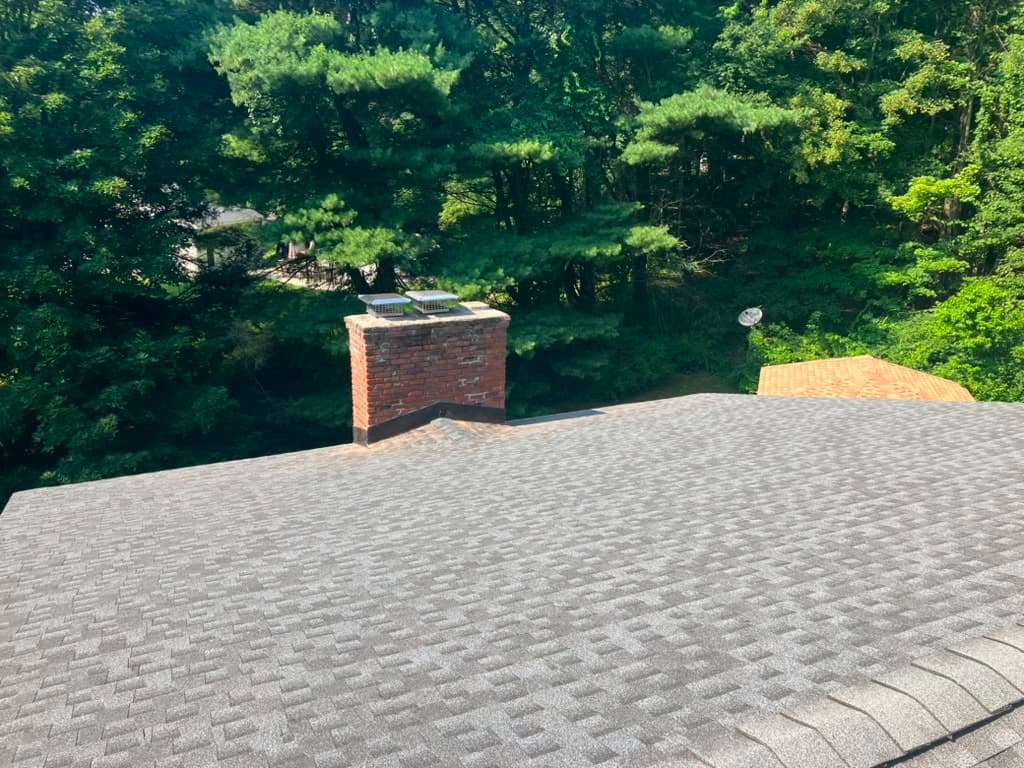
A lot of the housing stock in Putnam and Dutchess Counties predates 1940 by a wide margin: farmhouses, colonials, converted mill worker housing along the river towns, and plenty of homes that have been added onto two or three times since they were built. The chimneys on these houses have usually been through more than the rest of the structure, and they show it differently than a newer chimney would.
If you own one of these homes, there’s a decent chance your chimney’s problems started decades before you did.
Why so many of these flues were never lined the way a modern one is
Clay tile liners became a standard, code-required part of masonry chimney construction well after a lot of this region’s older homes were built. Before that became routine, a chimney was often just brick or stone, mortared up from the firebox to the cap, with the masonry itself doing the job a liner does today: containing heat and combustion byproducts and venting them safely outside.
That worked reasonably well when it was new and the mortar joints were tight. It works a lot less well eighty or a hundred years later, after decades of heat cycling, moisture, and the freeze-thaw pattern that’s routine in this climate every winter. Mortar is more porous and more vulnerable to that cycle than the brick or stone around it, and it’s usually the first thing to visibly deteriorate.
What settling actually does to a chimney over time
Chimneys are heavy, freestanding masonry structures, and like anything else built on a foundation, they move a little as the ground beneath them shifts over decades. A small amount of settling is normal and mostly harmless. The problem is that a chimney settles somewhat independently from the rest of the house, since it usually has its own footing rather than being tied structurally into the home’s main foundation the way a modern chimney chase often is.
Over enough time, that independent movement shows up as a chimney leaning slightly away from the roofline, mortar joints cracking in a pattern that follows the direction of settling, or a visible gap opening up where the chimney meets the roof. None of this happens overnight. It happens slowly enough that a homeowner living with it every day often doesn’t notice until something forces the issue, usually a leak, a smell, or a contractor pointing it out during an unrelated project.
Why this matters more than it used to
An old, unlined, slightly-out-of-plumb chimney that’s only ever vented an open fireplace a few times a year can go a surprisingly long time without causing a serious problem. The situation changes the moment a homeowner wants to add a wood stove insert, convert to gas, or simply use the fireplace more regularly than the house’s original owners did.
Modern wood stove inserts and gas appliances are designed around a specific, intact, properly sized flue. An insert vented into a chimney with cracked mortar joints, an irregular flue shape from decades of shifting, or missing sections of liner isn’t just inefficient. It’s a real safety issue, since combustion byproducts can escape into the masonry itself rather than venting cleanly outside, and that risk goes up specifically in older, unlined construction like a lot of what’s still standing in Putnam and Dutchess.
Signs worth taking seriously
A few things we look for that tell us a chimney has settling or lining issues worth addressing before winter:
- Cracked, crumbling, or missing mortar between courses, visible from the roof or from inside the attic where the chimney passes through
- A stack that looks visibly out of plumb compared to the roofline, especially noticeable from across the street
- White, chalky staining (efflorescence) on the exterior brick or stone, which usually means moisture is moving through the masonry
- Difficulty getting a fire to draft properly, or smoke smell in the house that wasn’t there in past years
- Rust or damage on a metal cap, or a cap that’s missing entirely, which lets water directly into the flue
Any of these on their own is worth a look. A few together, especially on a chimney that’s original to a pre-1940s home, usually means it’s time for a real inspection rather than another season of hoping it holds.
Relining versus rebuilding
The fix depends entirely on how much of the structure is actually compromised. A chimney with sound masonry but no liner, or a liner that’s cracked but the surrounding brick is solid, is often a good candidate for a stainless steel liner insert, sized to the appliance being vented and run the full height of the flue. This is a common, relatively contained fix for a lot of these older Hudson Valley chimneys.
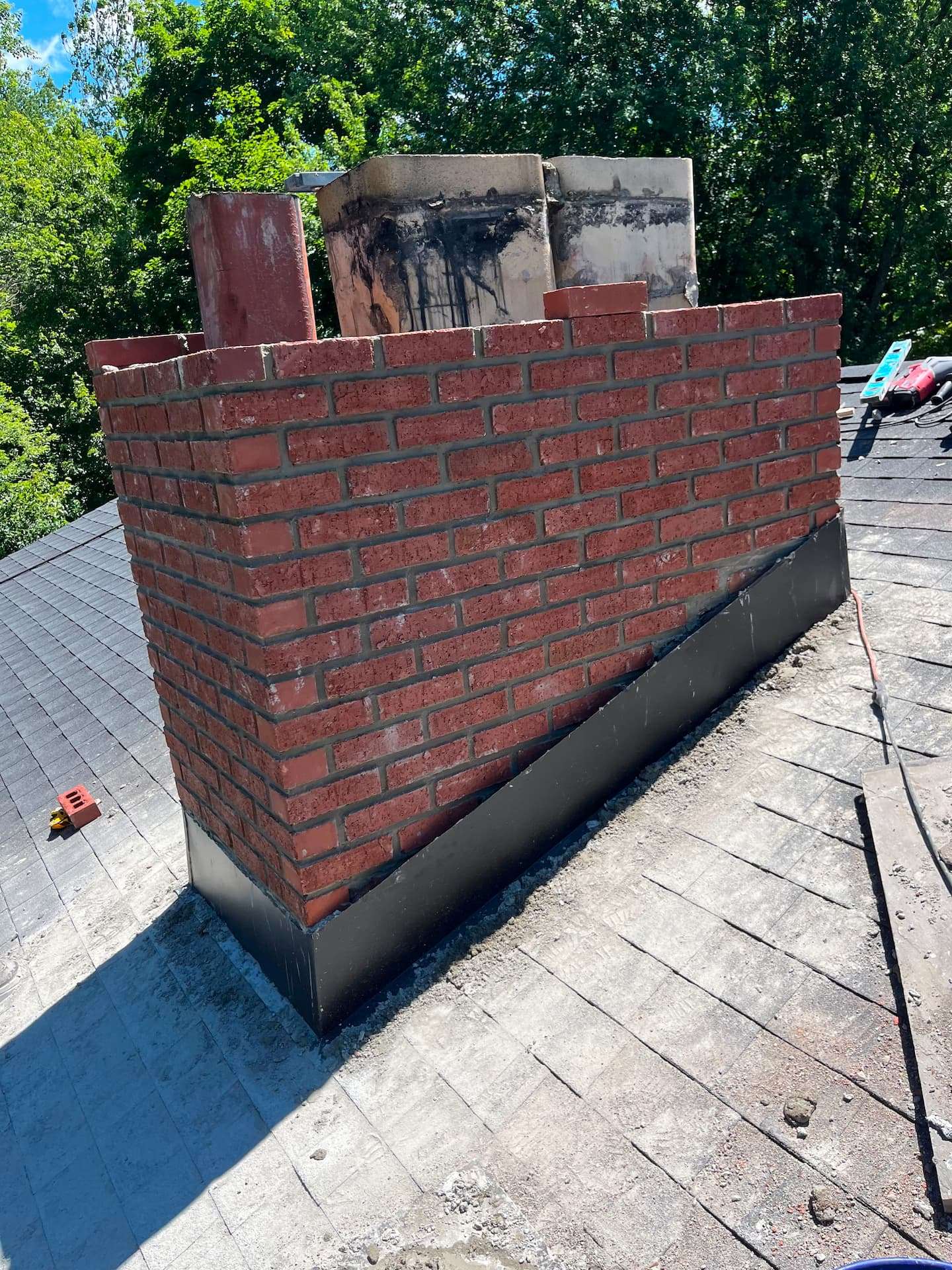
A chimney with significant settling, structural leaning, or masonry that’s crumbling well beyond the mortar joints is a different conversation. At that point, a partial or full rebuild is usually the more honest recommendation, even though it costs more upfront, because repeated patching on a structure that’s genuinely failing tends to be money spent without solving the underlying problem.
We inspect from the roofline down before recommending either. On a chimney this old, the right answer is rarely obvious from the ground, and it’s not something worth guessing at.